
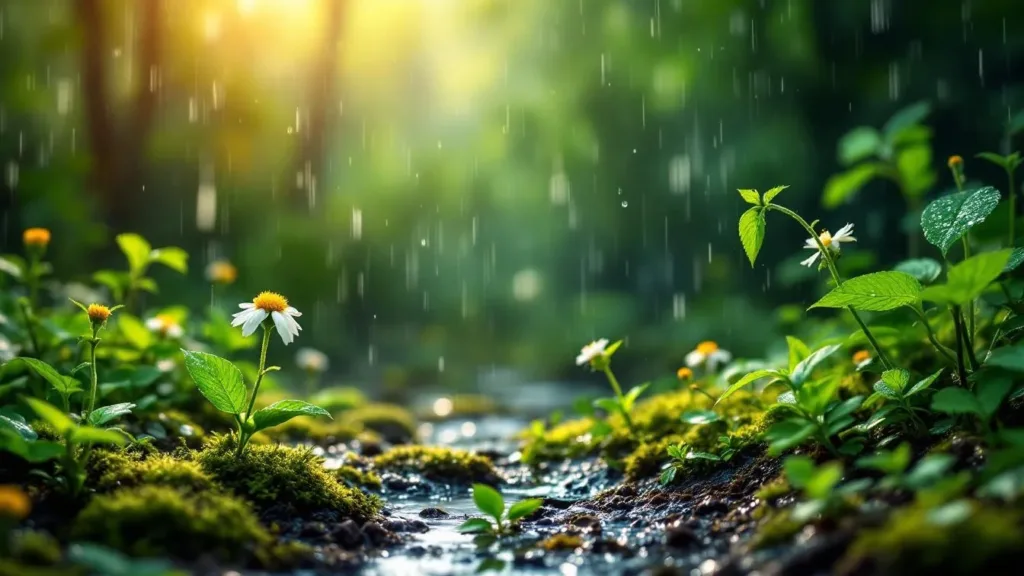
The alluring aroma that fills the air after rain is not merely an incidental scent; it holds a name and an intricate scientific background. Known as petrichor, this unique fragrance is the product of a fascinating interplay of natural compounds released into the atmosphere when raindrops collide with dry surfaces. Coined by Australian scientists in 1964, the term combines the Greek words for “stone” and “the fluid of the gods,” aptly capturing the ancient and ethereal quality of this scent. But what exactly makes petrichor so captivating, and why do humans have an exceptional ability to detect it?
The scent of rain is rich with complexity. When raindrops hit the ground, they unleash geosmin, a compound produced by soil-dwelling bacteria such as Streptomyces. This earthy aroma can often be detected even at pitiably low concentrations, making humans remarkably attuned to this natural cue. The evolutionary roots of this sensitivity likely hark back to our ancestors, for whom the scent signified life-giving water sources, thus playing a pivotal role in survival. Furthermore, the emotional resonance of rain scents often evokes nostalgia and peace, setting the stage for an intricate relationship between human senses and environmental aromas.
Understanding Petrichor: The Science Behind the Scent
The rain scent emerges from a confluence of factors triggered by rain on dry soil. The foremost contributor is geosmin, which accumulates in the soil during dry periods. When rain falls, this compound is thrust into the air as tiny airborne particles, known as aerosols. These aerosols create that familiar, refreshing smell that many associate with the onset of a downpour.
Additionally, prior to rain, especially during thunderstorms, one may detect a sharp fragrance known as ozone. This occurs when lightning splits atmospheric oxygen and nitrogen, causing ozone to form and descend to ground level. As a result, two distinct yet complementary scents appear: the earthy aroma of petrichor and the ‘clean’ scent of ozone, creating a rich olfactory tapestry.
Why Humans Are Sensitive to Rain’s Aroma
The human olfaction system is finely tuned to detect the components of petrichor, particularly geosmin. Research indicates that humans can perceive this compound at concentrations as low as 5 parts per trillion, showcasing an incredible sensitivity that is not just fortuitous but likely evolutionary. This ability may have enabled early humans to locate precious water sources, a factor that remains critical even today.
Moreover, the psychological effects of rain scents can’t be overlooked. Many people report feelings of calm and clarity upon smelling petrichor, often associating it with childhood memories or moments of tranquility. The scent acts as a powerful emotional trigger, capable of alleviating stress and evoking a deeper connection to our surroundings.
Variations in Rain Smell: Factors Influencing Aromas
The aroma released during rain is not static; it can vary based on several factors, including soil type, vegetation, and even urban pollution. For instance, rain falling in forested areas typically carries different aromatic notes compared to urban settings with asphalt and concrete. The type of soil significantly influences the strength of petrichor, with certain compositions, such as clay, producing a more pronounced scent.
Additionally, the timing of rainfall plays a role in the perceived aroma. Rain that follows an extended dry spell tends to release a more potent smell, as the stored geosmin has had ample opportunity to accumulate. Conversely, heavy downpours may wash away these fragrant compounds before they have a chance to rise into the air.
Conclusion: The Beauty of Petrichor in Our Lives
Petrichor is much more than just a pleasant smell; it serves as a reminder of the intricate connections between humans and our environment. As people breathe in this earthy aroma, they encounter a sensory experience shaped by evolutionary history, emotional resonance, and complex environmental factors. The next time the rain falls, taking a moment to inhale the rich scent may evoke a sense of calmness and nostalgia, encapsulating the beauty of our intricate relationship with nature.